
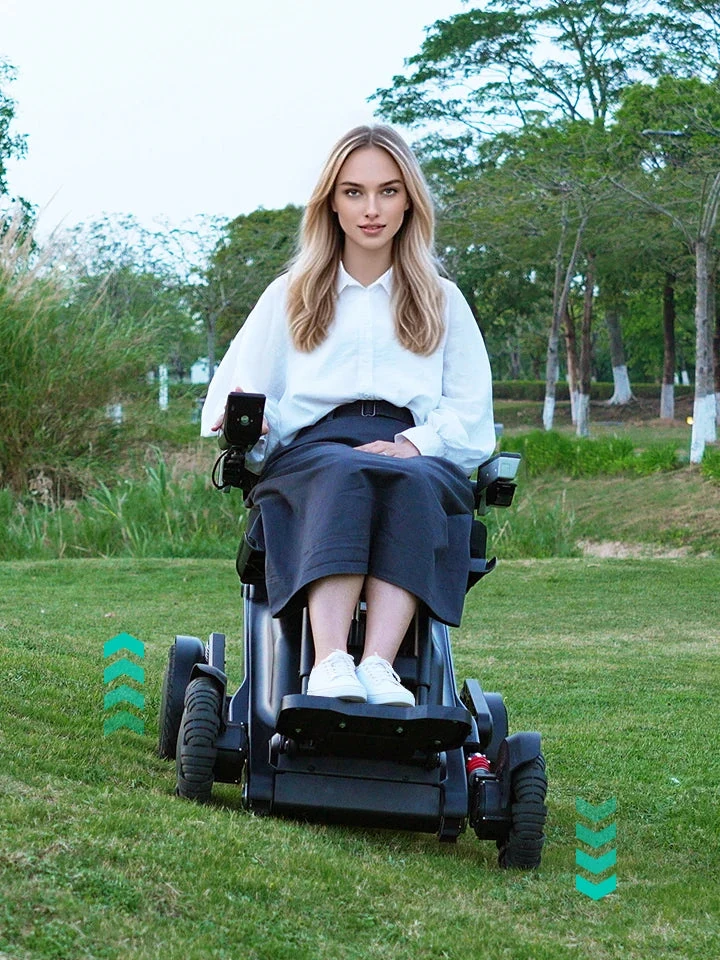
Four-wheel mode
Independent suspension on all four wheels and wheeled driving are designed for travel on surfaces such as level indoor floors, ramps, grass and gravel.
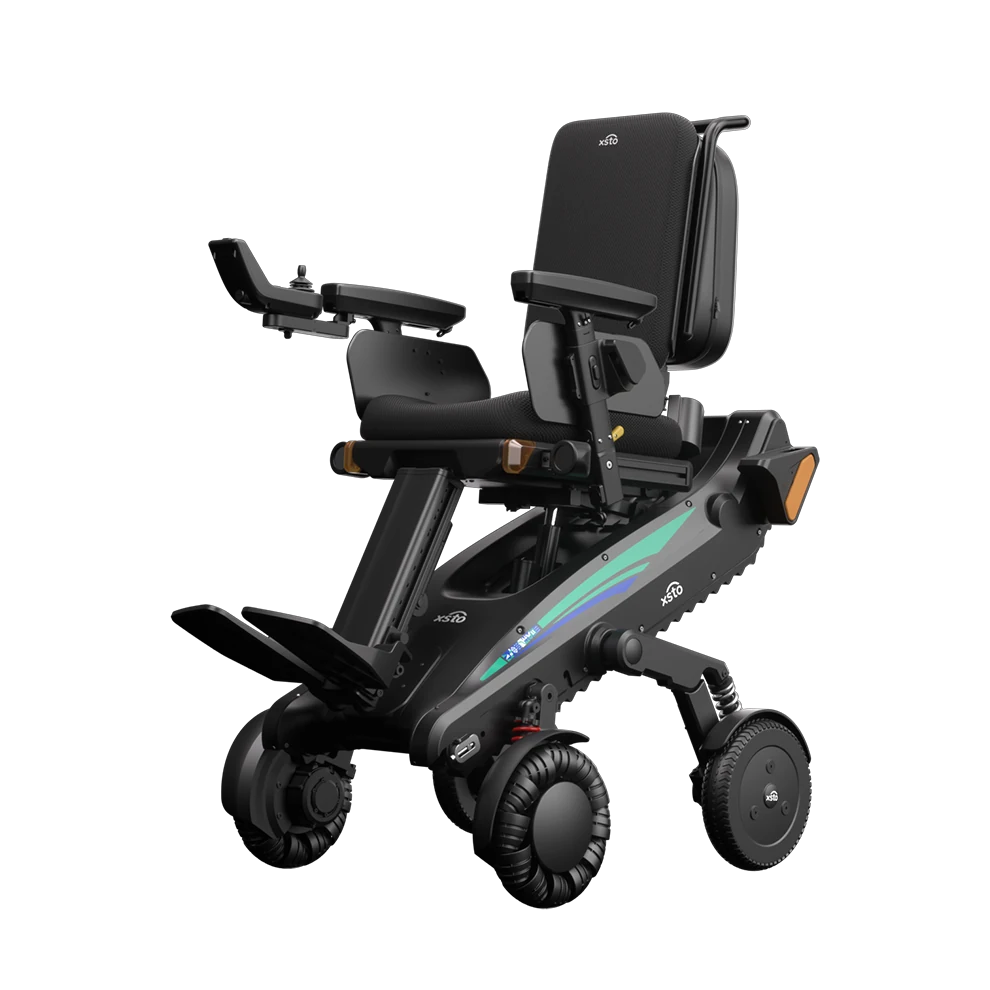
INTELLIGENT ALL-TERRAIN MOBILITY ROBOT
Designed to address stairs, ramps and different surfaces together, X12 combines the agility of wheeled driving with the off-road capability of tracked driving. AI-assisted control and an adjustable seating system are designed to adapt personal mobility to different operating environments.
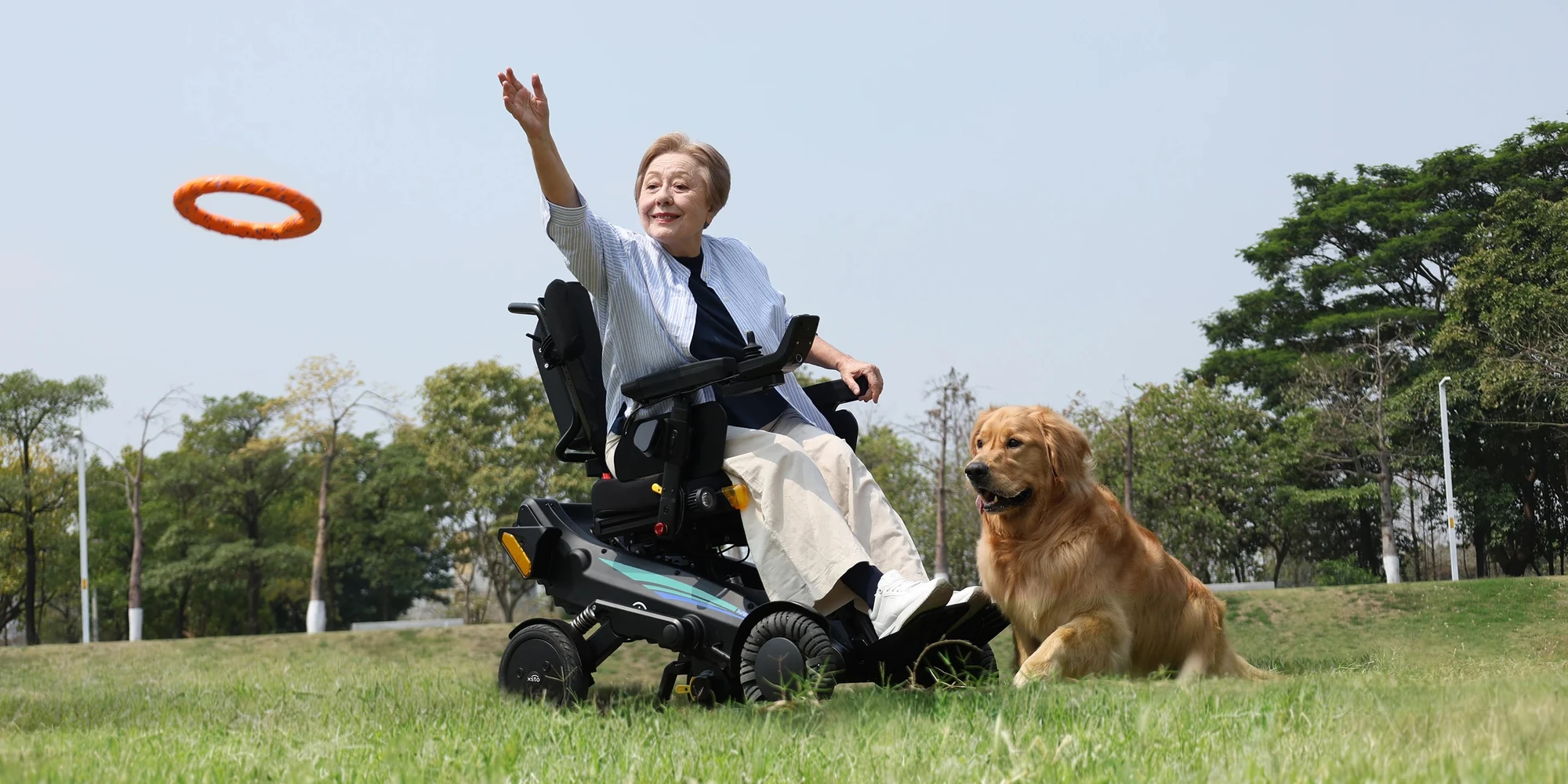
The X12 family features a mobility system that adapts to different surfaces, safety alerts and an individually adjustable seat. This page focuses on the standard X12 model; differences for X12 Pro are shown separately in the specifications table.

Some accessories shown in the images are optional; the scope of the order depends on the selected configuration.
Using the same mobility platform when moving from level ground to ramps or from stairs to uneven paths brings different mobility needs together in a single solution. X12's off-road capability must be assessed within the step, incline and landing limits specified by the manufacturer.
The hybrid wheel–track design can change how it makes contact with stairs, ramps and uneven surfaces. The four-wheel mobility system and two-track design offer different driving options depending on the terrain.
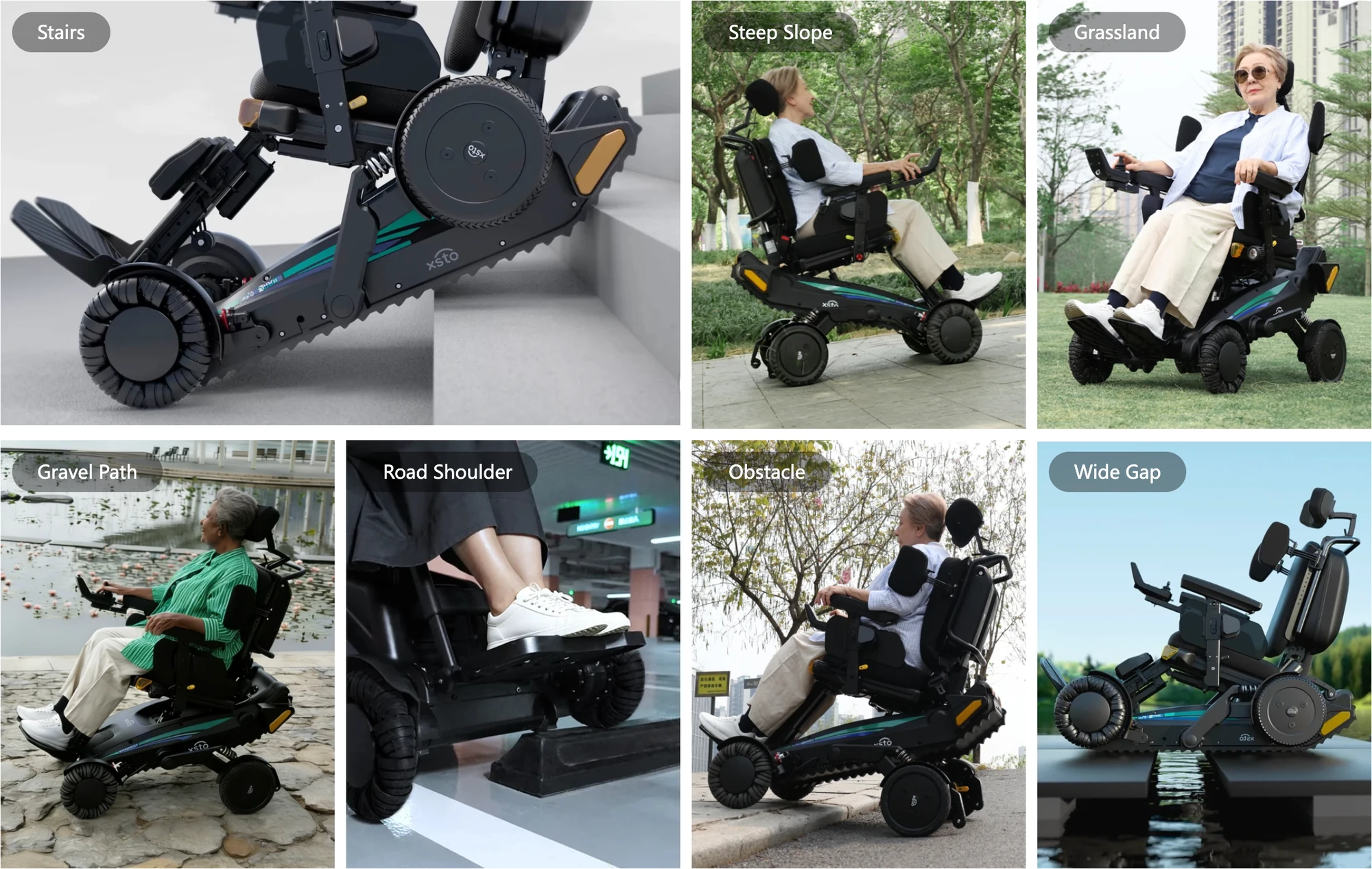
Different driving modes are used according to indoor and outdoor conditions. Understanding the purpose and operating limits of each mode is an important part of choosing a suitable route.
Independent suspension on all four wheels and wheeled driving are designed for travel on surfaces such as level indoor floors, ramps, grass and gravel.
Wheels and tracks work together to adapt to different ground levels at transitions such as stairs and kerbs.
Dual tracks and high-torque motors provide a tracked mobility option for wider gaps and challenging surfaces. Gap and obstacle limits are listed in the specifications table.
Sensor data is evaluated together with the manufacturer's control algorithms. The system supports movement stability by adapting body posture, driving mode and power output to the terrain.
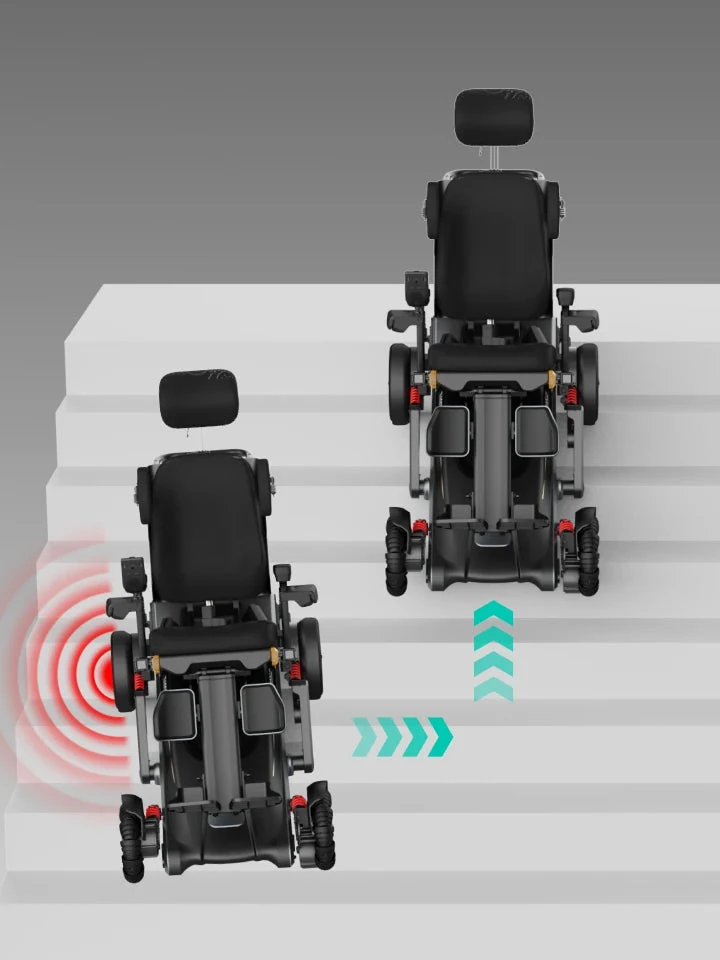
Detects stepped terrain to support switching to the appropriate driving mode, helping make transitions onto and off stairs more controlled.
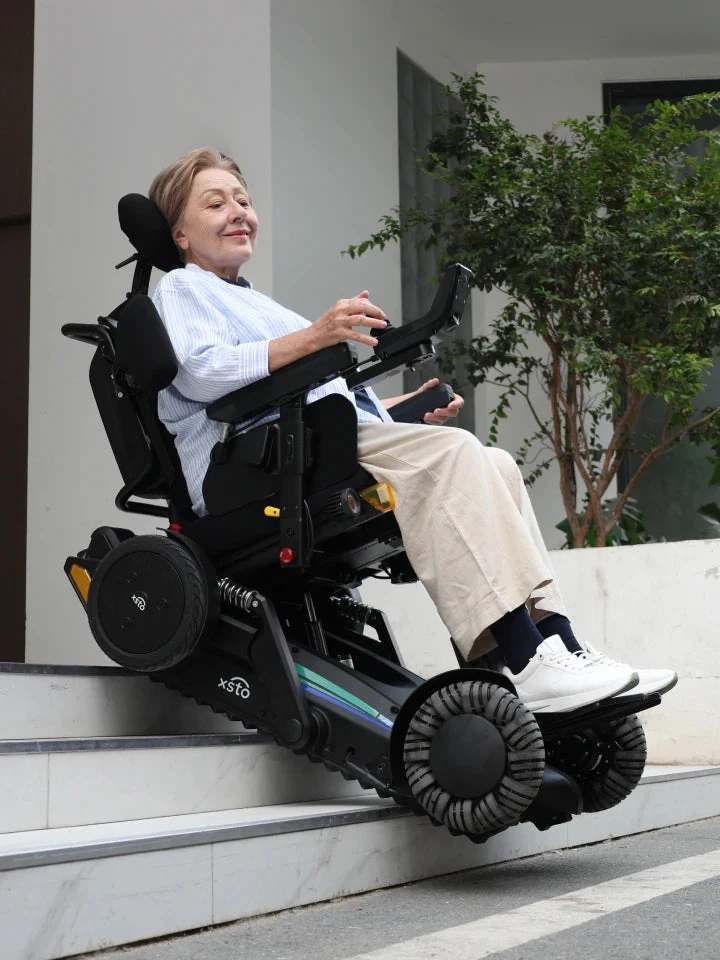
Power and torque output are adapted to route conditions with the aim of maintaining balanced movement while driving and crossing obstacles.
Monitors deviations from the driving direction during stair travel and helps correct them.
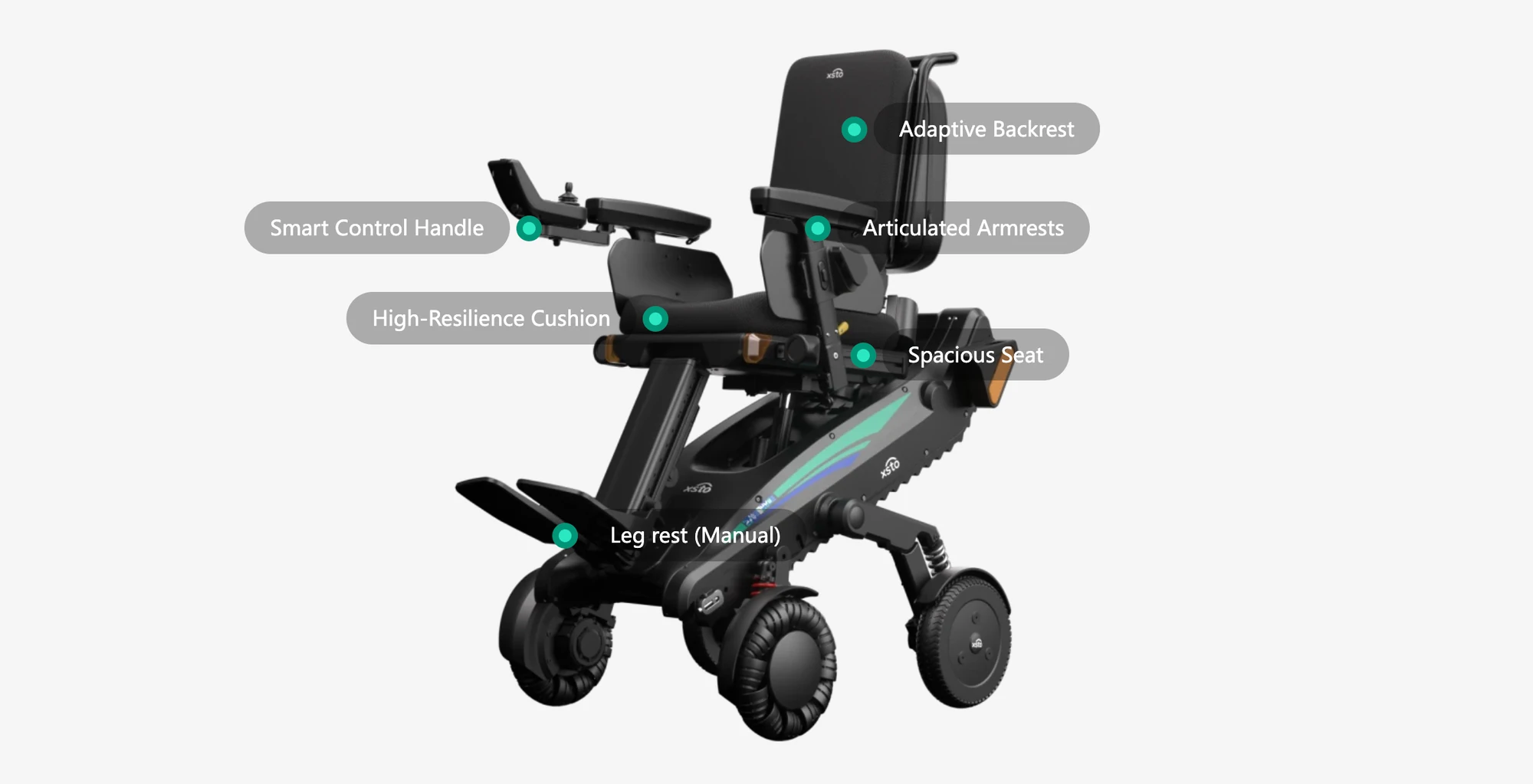
The advanced seating system combines functions such as multidirectional dynamic balancing, transfers from two directions and swing mode.
The manufacturer's Mengchong balancing system supports a balanced seating experience by adapting the seat's posture in different directions on complex terrain.
Front and side entry and exit options aim to adapt transfers into and out of the seat to different needs.
Dynamic swinging motion offers an alternative option for rest and relaxation during prolonged sitting.
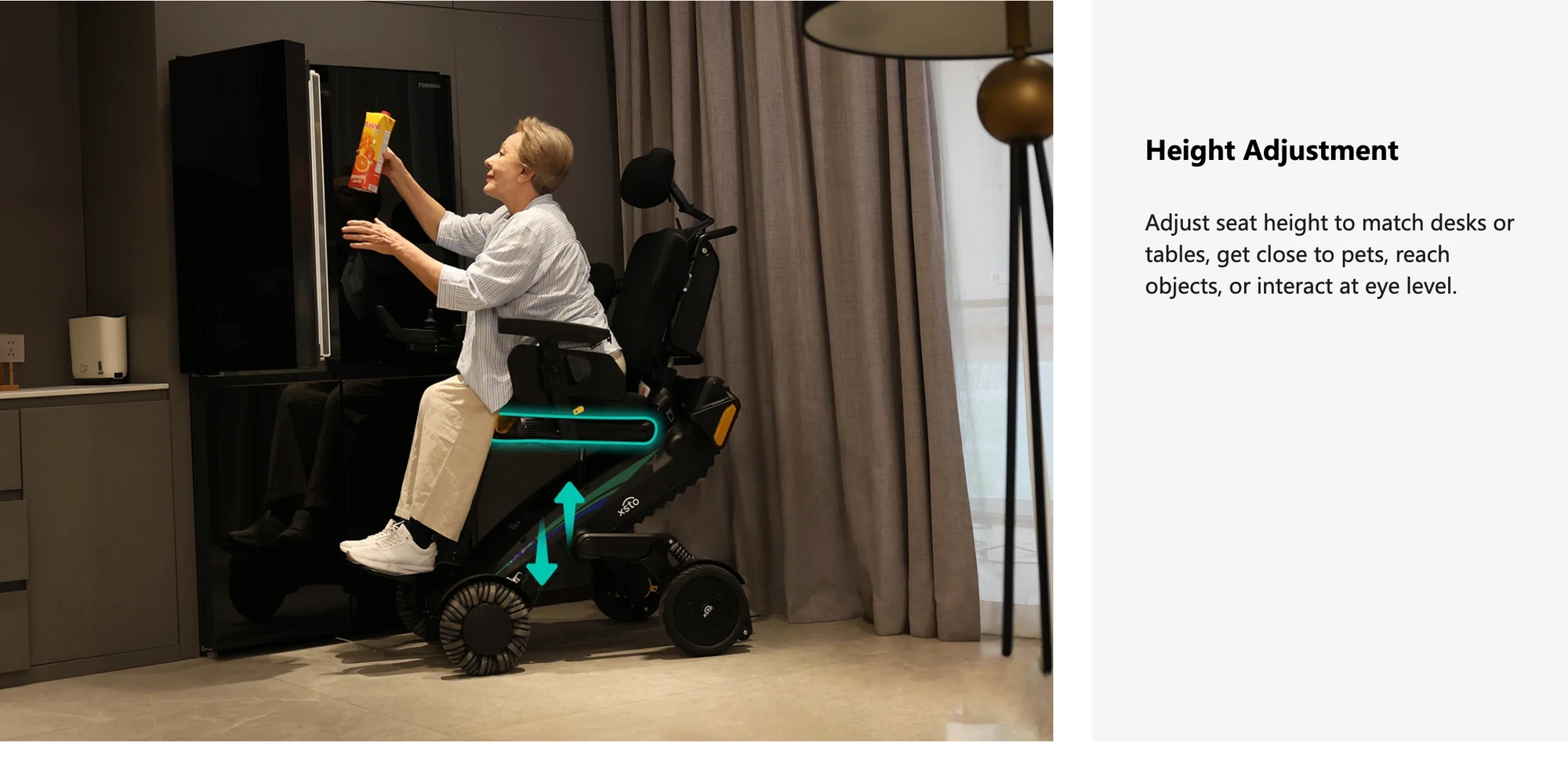
Seat depth, width and support points can be assessed according to different seating needs. Seating posture can be adjusted for use at a desk or table, rest and everyday interactions.
The 490–762 mm seat lift range is used to accommodate different table heights, reach requirements and face-to-face communication.
The tilt range from −8° to 40° is provided to adapt seating posture to everyday activities such as reading, eating and resting.
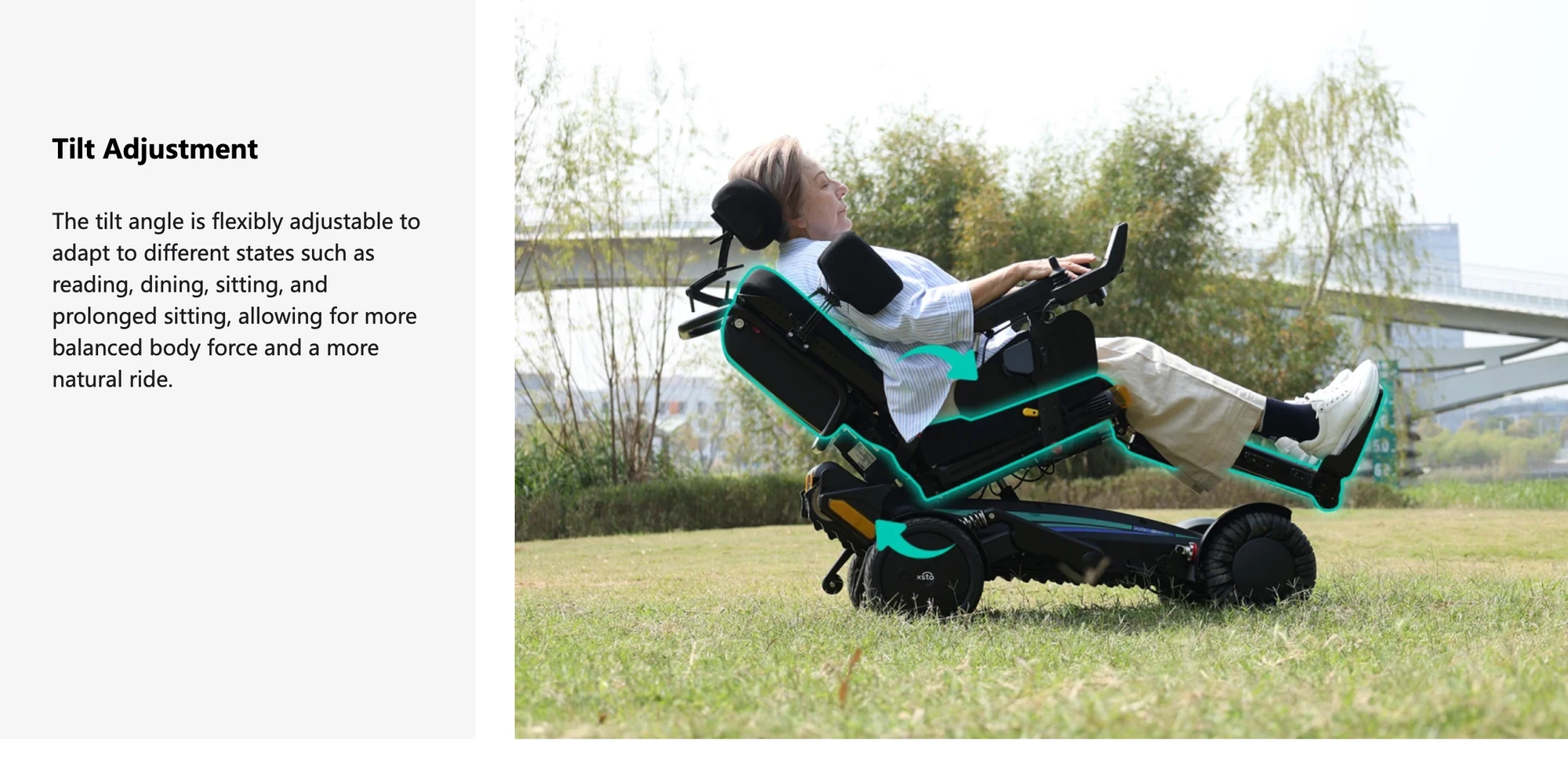
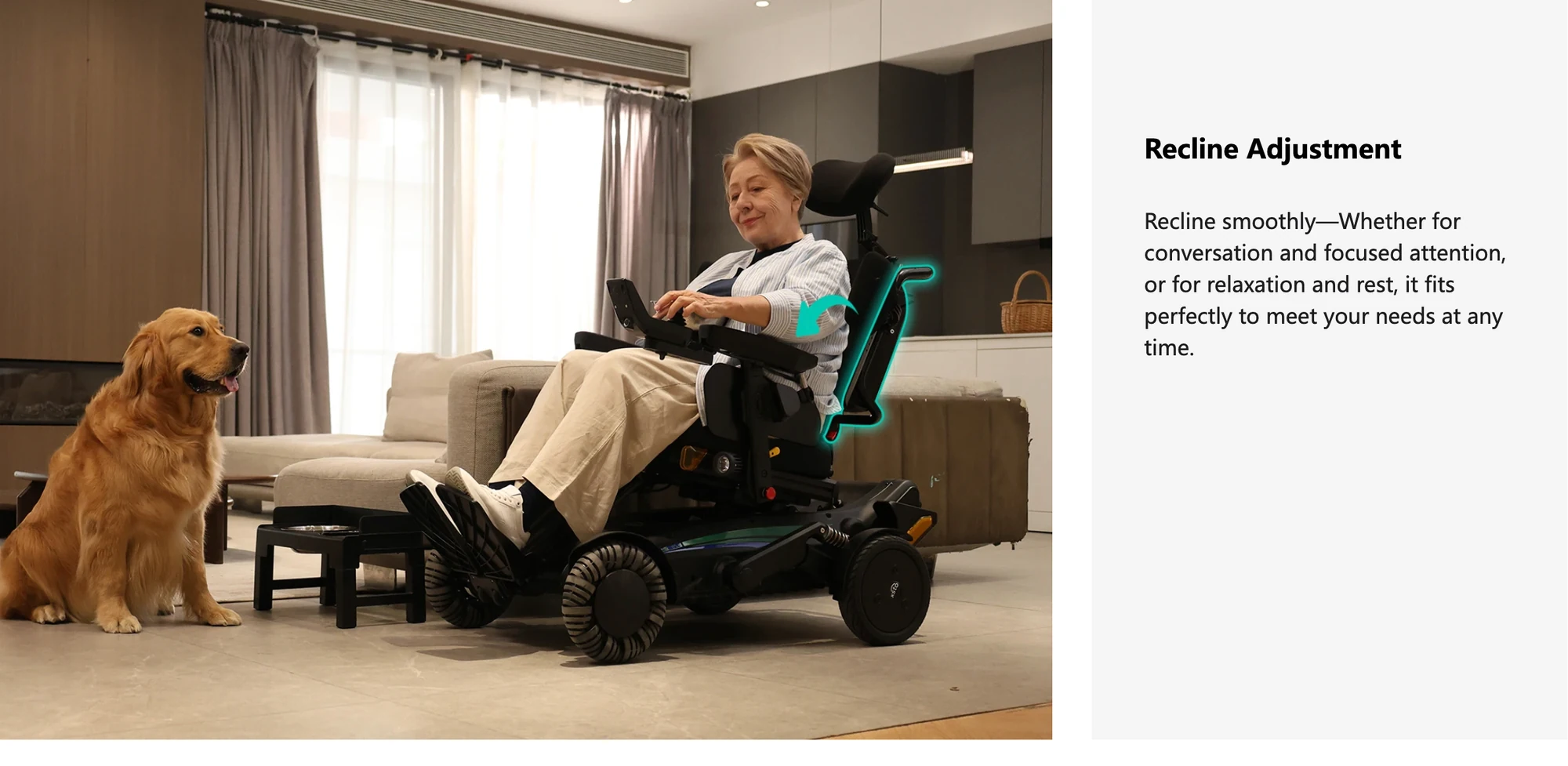
The 90–121° backrest adjustment provides individually tailored support between upright sitting and resting positions.
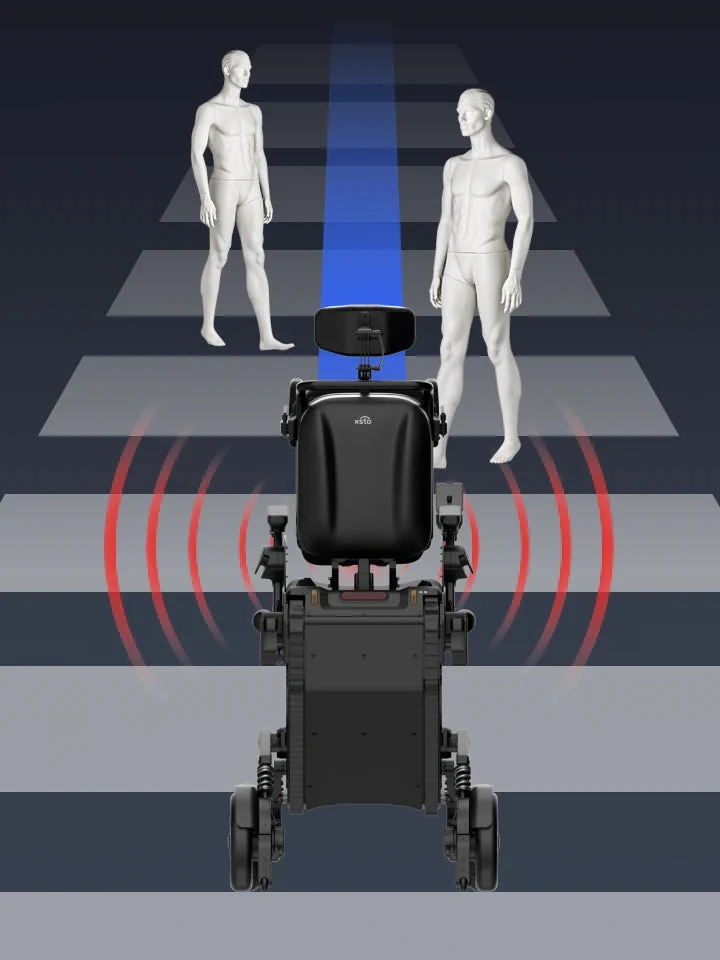
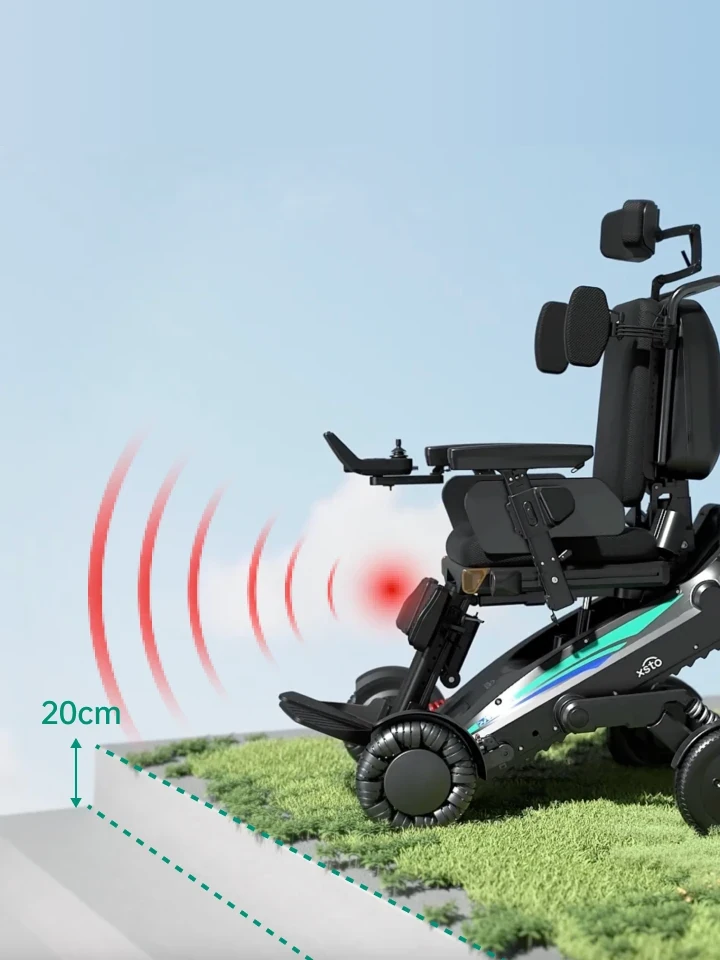
LiDAR and proximity sensing functions are used to draw attention to potential risks in the surroundings and support driving decisions. These assistive alerts do not replace user control or the choice of a suitable route.
Detects nearby obstacles to provide early warning of a potential collision risk.
Provides an audible warning when approaching obstacles to support awareness of the surroundings while manoeuvring.
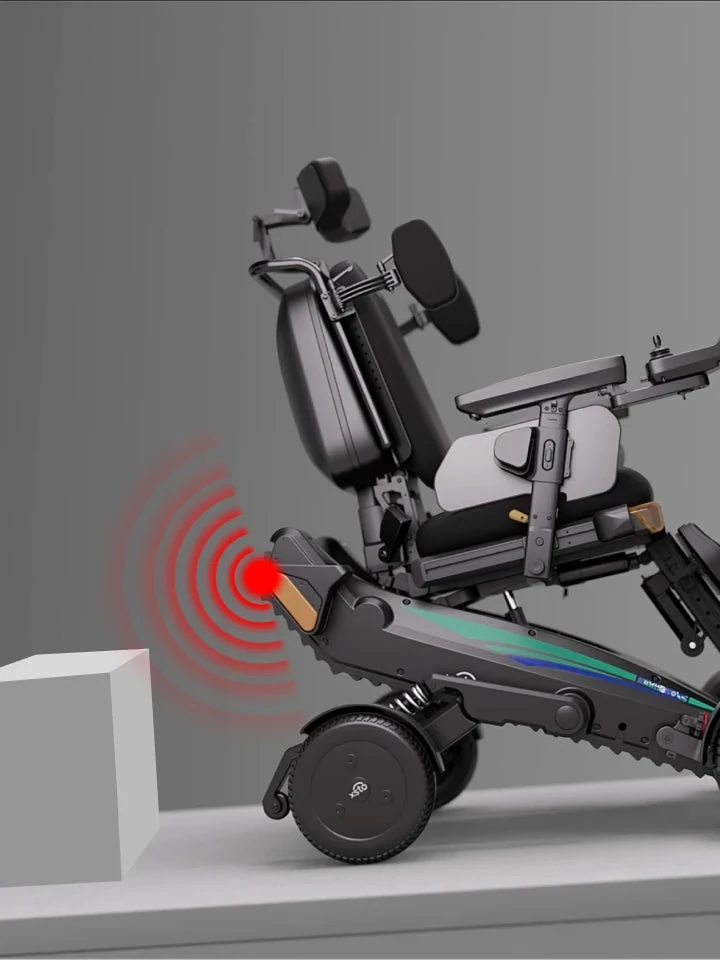
Detects significant changes in level ahead, such as a step or edge, with the aim of providing a warning before approaching the hazardous area.
The manufacturer offers options such as an adjustable headrest, portable ramp, auxiliary controller, phone and umbrella holders, cup holder, various seat and back supports, and battery and lighting accessories. Which accessories are included in an order for Türkiye must be confirmed separately.
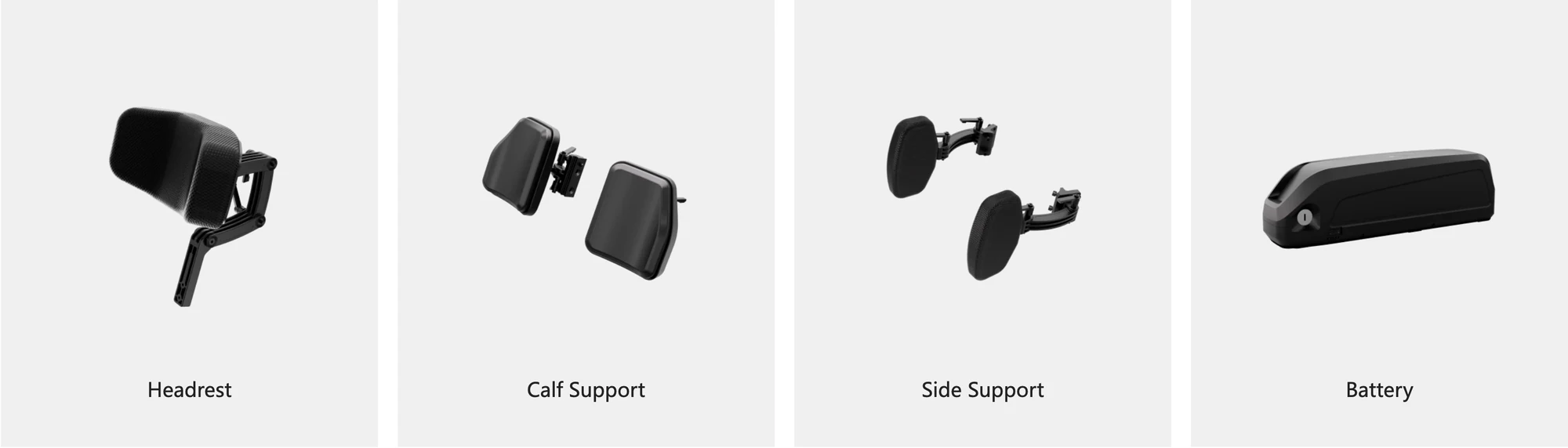
Images of accessories do not indicate the contents of the standard package; optional products may be priced separately.
The values below are based on the table on the manufacturer page you linked. The sales price is for the standard X12; the Pro column is included solely to show differences between the models.
| Feature | X12 | X12 Pro |
|---|---|---|
| Model | X12 | X12 Pro |
| Maximum load capacity (user + luggage) | 136 kg | 136 kg |
| Weight excluding battery | 115 kg | 116 kg |
| Speed range | 0–12 km/h | 0–12 km/h |
| Range on level ground | 35 km | 35 km |
| Charging time (manufacturer table notation) | 6.5 hours × 2 | 6.5 hours × 2 |
| Stair ascent / descent speed | 25 / 30 steps/minute | 25 / 30 steps/minute |
| Seat tilt | −8° / 40° | −8° / 40° |
| Backrest angle | 90–121° | 90–121° |
| Battery | Lithium 25.2 V · 25.6 Ah × 2 | Lithium 25.2 V · 25.6 Ah × 2 |
| Seat lift range | 490–762 mm | 490–762 mm |
| Obstacle clearance height | Front: 100 mm / Rear: 220 mm | Front: 100 mm / Rear: 220 mm |
| Gap crossing | Wheeled: <180 mm / Tracked: <300 mm | Wheeled: <180 mm / Tracked: <300 mm |
| Compatible stair step | Height <200 mm · Incline <35° | Height <200 mm · Incline <35° |
| Stair landing | L-turn: 1400 × 1400 mm / U-turn: 1400 × 2000 mm | L-turn: 1400 × 1400 mm / U-turn: 1400 × 2000 mm |
| Ramp incline capability | Wheeled: 15° / Tracked: 40° | Wheeled: 15° / Tracked: 40° |
| Seat depth / width | 380–435 mm / 390–440 mm | 380–435 mm / 390–440 mm |
| Legrest adjustment | Manual | Electric |
| Folded dimensions (reference page) | 1200 × 685 × 617 mm | 1200 × 685 × 617 mm |
| Unfolded dimensions | 1210 × 685 × 1550 mm | 1210 × 685 × 1550 mm |
The folded length is listed as 1200 mm in the reference for this page and 1185 mm on the manufacturer's corporate website. The exact transport and storage dimensions for the configuration must be confirmed before ordering.
The manufacturer's table lists the charging time as 6.5 × 2; this notation has not been interpreted as a total of 13 hours. The charging arrangement for the two batteries and the device configuration must be confirmed with the supplier.
Product photos, usage scenes and function demonstrations are for reference purposes. The device and package contents to be delivered are determined by the approved order configuration.
The 35 km range and stated speeds are manufacturer data; user and luggage weight, terrain, incline, driving mode and battery conditions may affect the results.
For stair use, step dimensions, incline and landing conditions must be checked together. The user manual and device training must be followed; sensor alerts must not be treated as an unconditional safety guarantee.
You can use the contact form on this page to request information about the standard X12, accessory options, delivery and user training.
XSTO X12 is a mobility robot designed for personal mobility on stairs, ramps and different surfaces, featuring a chassis that combines wheels and tracks, three driving modes, intelligent seat balancing and sensor-assisted control.